
The “Sport” Jacket Came Indoors
Norman Hilton was well-established as the source for tweed sport jackets back then, and the primary source of tweed fabric was (and for the real thing, still is) Scotland. In my first days as a stylist, I traveled to Scotland to visit the mills, to work with their designers to create the seasonal offerings for Norman Hilton retailers, at the time about 150 in number. This was like a field trip for me, a new student and I was instantly entranced by the heritage and the art of making tweeds.
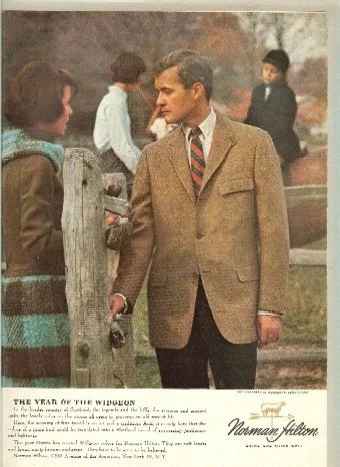
Norman Hilton Sport Coat 1960s
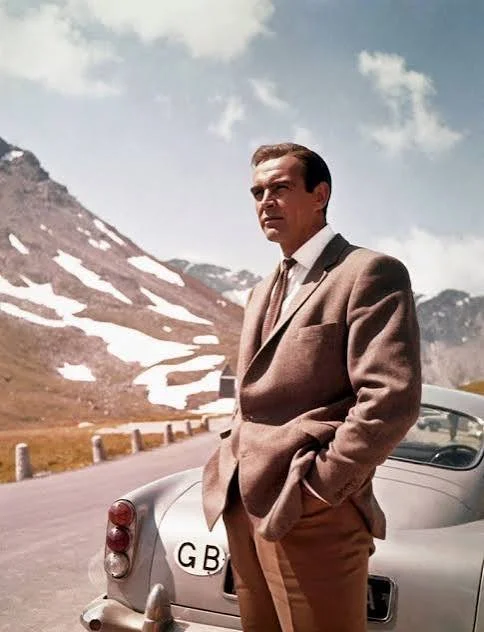
Since the 18th Century, from Dumfries and Galloway in the south and as far north as the Shetland Islands, Scottish weavers have created colorful, practical fabric for jackets to be worn outdoors at first, for sport, primarily shooting. The word itself, “Tweed,” is the name of a river that runs through the Scottish Borders, south of Edinburgh. I always stayed near there, at the Cringletie House Hotel, an elegant 19th century manor house on a hillside amid sheep meadows and fields of broom and thistle near Eddleston, Peeblesshire. Cringletie House was full of well-heeled English folks on summer holiday, and it was there that I was introduced to true casual elegance. What I call Level 3. Picture 007, James Bond, Sean Connery, wearing a sport jacket with a roll-neck, or with a spread collar shirt and a cashmere V-neck. It’s the way these blokes dressed for dinner every night: relaxed yet distinguished. They had an air of stylish vacationers, simultaneously well dressed and completely at ease.
The British “Look”
These men, up from the Cotswolds or the Midlands, wore jackets that were not ‘tweedy.’ The American sport jacket, to my freshman mind, was either a heavy, scratchy thing you wore with a big Beat Yale pin, waving your pennant, or some form of pseudo-suede polyurethane substance you wore to the craps table in Vegas. These guys’ jackets were made of worsted wool, so they were lighter weight than tweed jackets, more like suit coats, but the neat, colorful patterns made them “sporty.” They almost always were three-buttoned and side-vented, and they had a trim, suppressed-waist line that was the trademark of English tailoring.
Even though their jackets were plaids or checks, the Brits wore patterned shirts with them: small checks, subtle stripes, or even a tattersall, sometimes with striped or “club” ties. Difficult to describe or even to imagine, the combinations of pattern in the jacket, shirt, and tie seemed natural, natty, even. What made it all work together was the color range, the subtle ensemble of complementary tones, and the matching dimensions of the patterns. An olive and rust check jacket would go with the ecru shirt with tan and dark green stripes, and the rust and burgundy stripes of the tie would bring the whole thing together. Or they might have worn a roll-neck or long sleeve polo. It would not be unusual to see a suede or doeskin vest in brown or the color of chamois. With all this the gentlemen sported gabardine or serge or whipcord trousers, the colors of which, from beige to dark brown, olive or grey, were another perfect complement to the outfit. It seems to be intrinsic to the British culture, this sense of elegant ease, as if it were a required course at school.
FYI Thedart, or the seam that runs from the middle of a jacket’s chest to beneath the pockets, when sewn together creates suppression in the front of the jacket, giving the effect that the waist is smaller than the shoulders and the hips. The old-school version of the Natural Shoulder jacket had no front darts because the desired effect was a straight-hanging jacket with an easy-fitting waistline. People called this the “Sack Coat,” because of that, but it was a mistake. The sacque was what the French called a jacket with no tails, as distinguished from a frock coat by its cropped back length. The English “sack” coat was nothing more than any such coat. “Sack” might have aptly described the silhouette of the 50’s Ivy League jacket, but it was really a misuse of the term.